To view a lager version of the pictures, click on them. Hit your browsers back button to return to this page.
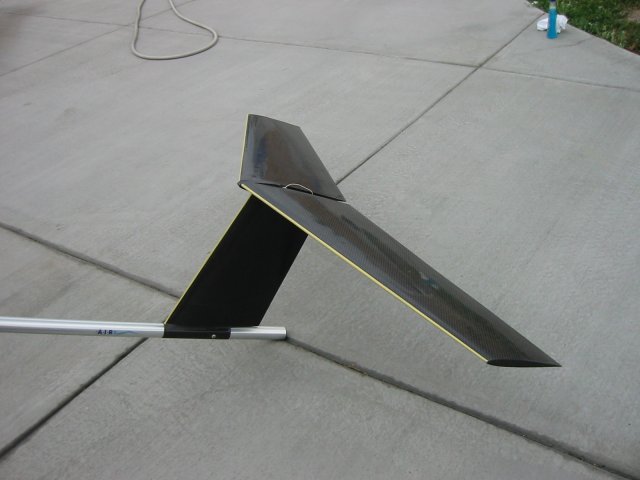
The following 5 pictures are from Jim Yocum. The first
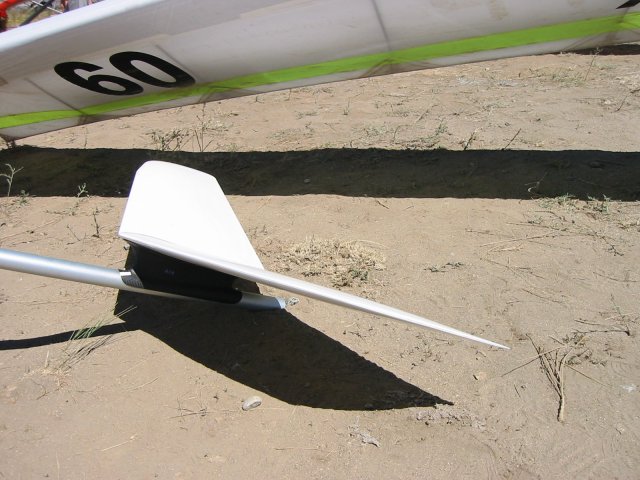
three are of the T-tail made by John
Vernon. In this picture there is a small string visible between
the two horizontal surfaces. This is the limiter string that
prevents the tail from rotating more than 90 degrees.
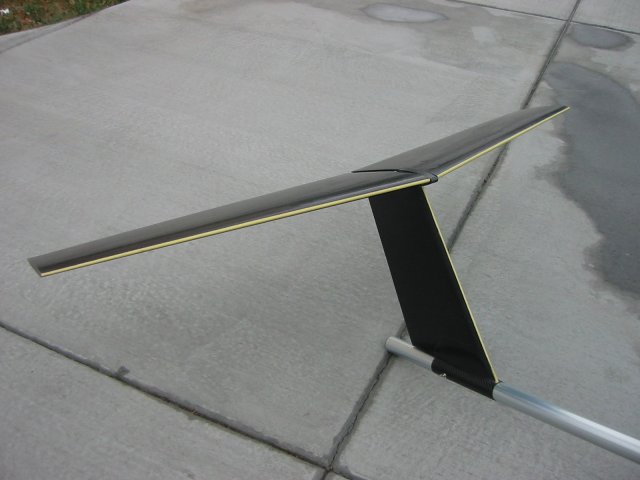
The T-tail is free to float above the horizontal axis in
flight. This enables it to produce very little drag in flight.
If the nose of the glider suddenly pitches down. the tail will hit the
horizontal stop and add down force to the glider to help prevent pitch
over (tumble).
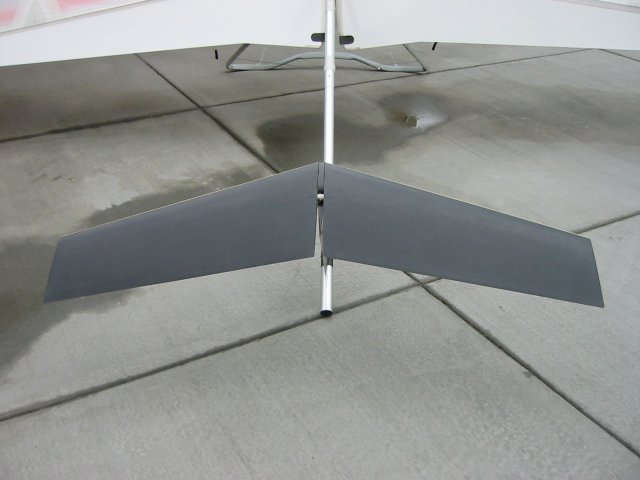
The vertical riser of the T-tail help keep it out of the
weed/crops, launch carts, etc.
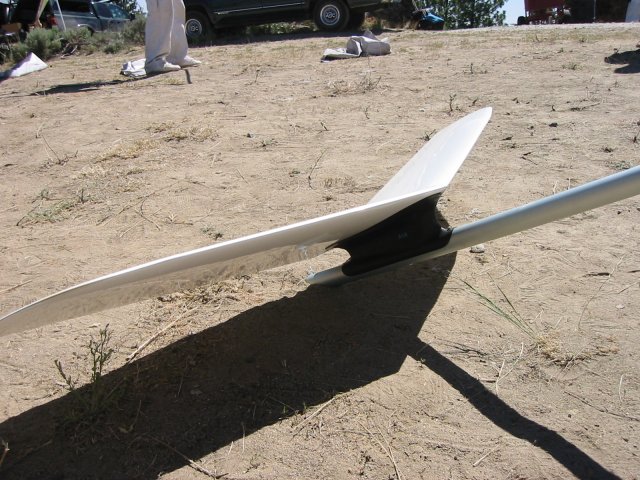
This is the V-tail made by Felix at AIR. This tail is
fixed in place. It is designed so the angle is such that there is
minimal drag in flight. When the nose pitches down the tail provides
down force to help keep the glider from pitching over (tumble).
Since the tail is fixed, it also dampens any pitch up as
well. Pilots who have flown with this tail have reported the bar
movement is more dampened in pitch.
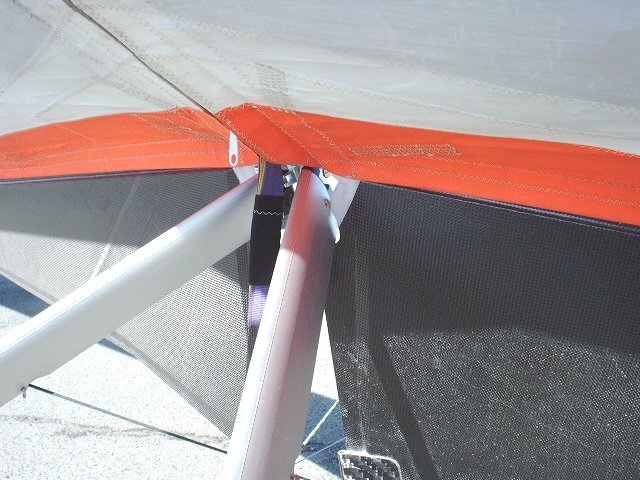
These next three pictures show a slight modification I had
to do to prevent the flaps from hitting the Wills Wing Slipstream down
tubes. Click on the link for Wills and then enter Atos under the
search and it will come up with the part number and price for the control
frame.
The down tubes are part of a complete control frame package
from Wills Wings that includes carbon basetube and new front and rear wire
sets.
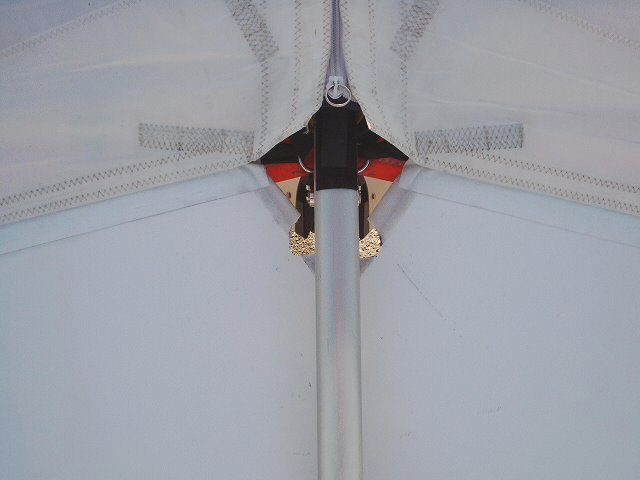
The flaps not deployed in this picture.
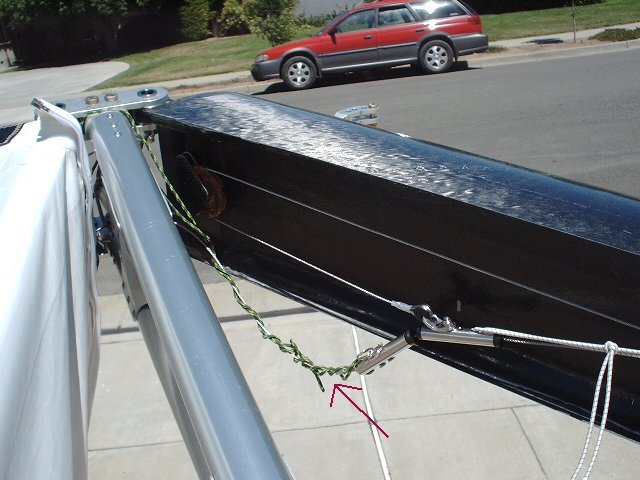
The red arrow in this picture is pointed at the spoiler
limiter rope. Some early C models and Stratos C models were shipped
with the limiter rope in the center. The limiter rope should be
moved to the #6 rib as in previous versions of the Atos.
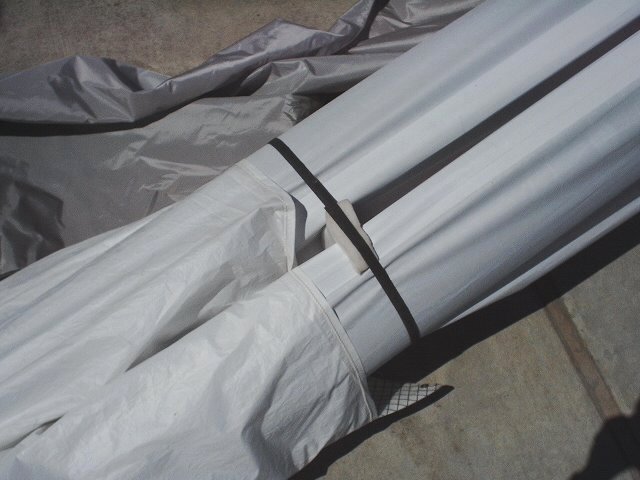
Some pilots place extra padding between the D-cells near the
spoilers to prevent the D-cells from bumping together in transport.
An aeronautical engineer suggested that placing shear ribs
on the Atos would help dampen the pitch when encountering gust
loads. I used Velcro sewn between two pieces of self adhesive Dacron
sail cloth. I did not notice any difference in flight and I removed
all of them.
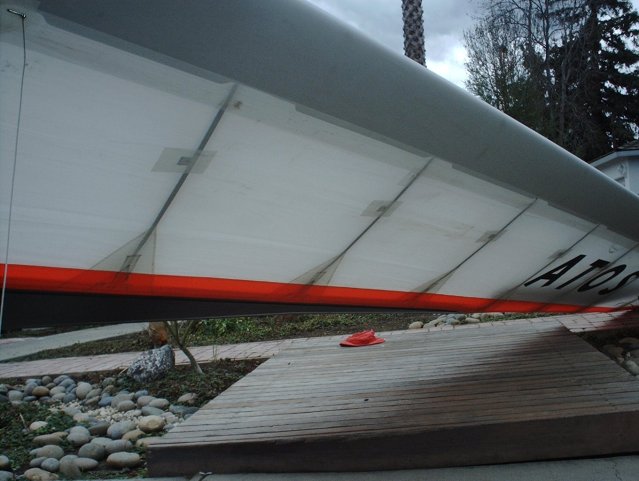
The shear ribs are visible at each rib.
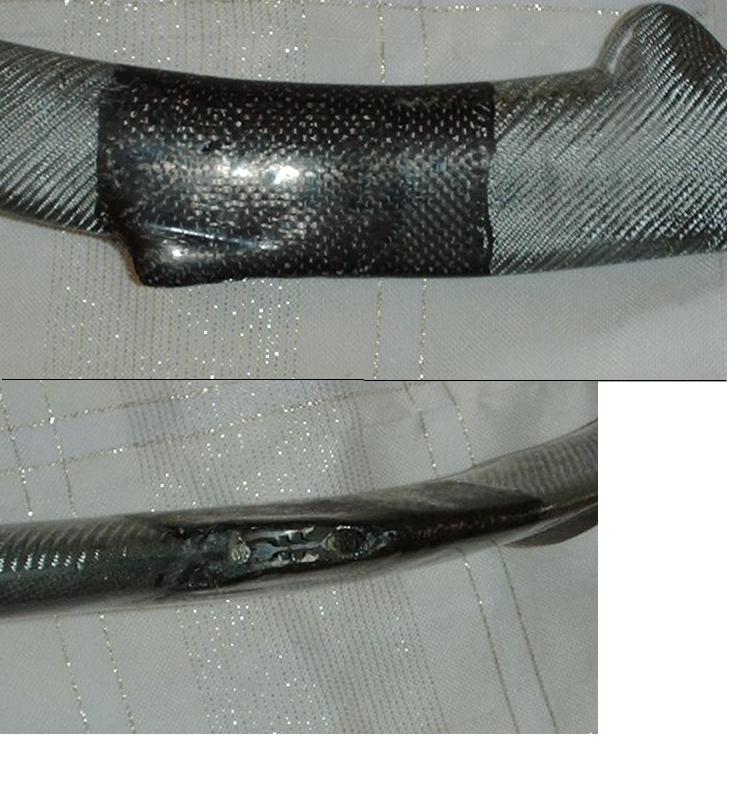
This shows how I modified my base tube to provide extra
support around the flap cleat. On early model C's, they notched the
base tube for the cleat. On the new base tube the cleat is covered
as in my picture. They do a much better job and the new base tube is
all caron as are the uprights. Having the cleat covered is also
easier on my right hand.
I like to carry my harness bag in my sail. To prevent
it from sliding forward and jamming the spoiler cables, I installed two
shear ribs, one on each side of the keel. They are about 8"
back from the pulleys.
This is my modified spoiler. It is about the same size
and shape as the original Atos spoiler. The glider turns much faster
with the new spoiler, but only when given maximum deflection.